The world is in the midst of a water crisis. The typical story is that fresh water supplies are running out and that we are bleeding the earth dry.
Water, one of the fundamentals for all life, is getting scarcer so we need to value it more and manage the fresh water resources to ensure that they don’t run out. But the real story goes deeper than that.
I’d just shuffled forward to the red block embedded in the snow and turned the catch the approaching chair, when he scooted forward and sat next to me. Sharing a chairlift with someone else can be a bit hit and miss – turns out Keoki Flagg is a photographer on his day off, enjoy some of the 100 odd inches of snow we just had drop on us. We get chatting and I promise to visit his gallery in the village at Squaw.
The next afternoon, I duly pop in after another fantastic day riding Squaw. Wow. His photos are incredible and I wander around open-mouthed at his images and how they’re presented – bonded straight onto a high-quality perspex that gives them an incredible pop. ‘High Definition for photos’ is how he describes it. Over the course of our chat, I reveal that I enjoy a bit of photography too and he asks me the question that has prompted this blog – ‘what subject do you shoot?’.
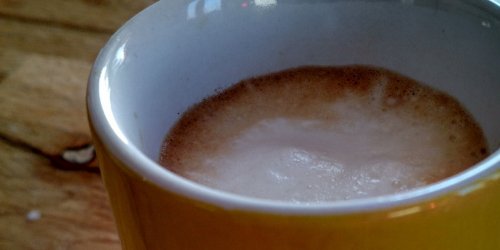
Having just returned from one of the largest coffee producing and one of the largest coffee consuming countries in the world, it seemed fitting to make a cup (plus I need it to deal with the subsequent jetlag!).
The coffee production in Ethiopia is critical to the Ethiopian economy with about 25% of the population depending directly or indirectly on coffee for its livelihood. In 2006 coffee exports accounted some $350 million, equivalent to 34% of that year’s total exports…
Ethiopia is the world’s 7th largest producer of coffee, and Africa’s top producer, with 260,000 metric tonnes in 2006
Ethiopians (or more precisely the Oromo) argue strenuously that they were the first to discover coffee, so I thought I’d buy some beans while I was there. One of our local WaterAid staff took me to a supermarket and proudly showed me the shelves of ground coffee – wanting to be a bit more authentic, I asked him if I could get some beans. He was a bit confused, and after a while responded with “ah, yes, raw coffee” and hustled me back into the car. After driving around for a while, he abruptly stopped outside a tiny shack and shouted over at the man behind a set of rusty scales. A brief haggling exchange resulted in a 500g bag of beans for about £3. Great! Except for the teeny tiny fact that they were green, unroasted beans. Too embarrassed and guilty to reject them, I sheepishly paid and smiled gratefully wondering what the hell to do with them.
Rocked up in san francisco a few days ago to see my mate Gav – left to my own devices for a few days, I rashly booked a camper and headed to Tahoe. Decided on Squaw Valley, checked out the forecast – 2 feet of fresh and more on the way! Totally by chance I seem to have picked possibly the place with the best snow conditions on the planet.
Brixton underground station, London.
This is the wonderful part of South London that I am proud to call home. It’s the morning rush hour and a torrent of humanity pours through the mass of morning activity – market traders setting up for the day, incense sellers outside Iceland and fluorescent jacketed newspaper distributors. It snakes along Brixton High Street, flowing into the great yawning mouth of the station.
Today, the next round of climate negotiations kicked off in Cancun. Everyone from governments to NGOs to media are there, fighting climate change. Everyone who’s anyone in the world of climate change is there. But not me.
“Why not?!” I hear you cry. I work on climate change, I’ve been to previous COPs, I know the players, I know the politics. It is precisely because of this that I’ve chosen not to go.
OK, so I’m still rubbish at updating my blog. Partly because I’m not sure what I’m doing with this anymore, I seem to have conflated work with my personal life, very mixed audiences; but also partly because I’ve been busy at work.
So I’m working out what to do and probably going to split off my work bits elsewhere.
Watch this space (hopefully not for too long!)
S’pose I should actually write something on this blog from time to time!!
Well, I’m about to head off on another set of journeys. This time it’s work related. After a short trip to Brussels to take part in the Alliance for Water Stewardship Roundtable, I’ll be heading off to Nigeria for a regional team strategy meeting, supporting their advocacy work. I’m part of WaterAid’s West Africa regional team, one of our regions consisting of Sierra Leone, Liberia, Mali, Burkina Faso, Ghana, Niger and Nigeria. There’s plenty I could tell you about each of the countries, but here are some snippets:
The Sahel region includes part of Mali, Burkina Faso, Niger and Nigeria. Traditionally, most of the people in the Sahel have been semi-nomadic, grazing livestock in the North during the wet season and migrating south during the dry period. Remember that Barclaycard advert with Rowan Atkinson walking off with a burning carpet saying ‘smell those Touareg campfires’?
Niger is roughly 2/3 desert and is currently in the grip of a major food crisis. Every year, the country faces food shortages with a ‘hungry season’ from May to July, but this year it started in February. It is the lowest ranked country in the UN’s Human Development Report 2009. WaterAid has just started working in Niger.
WaterAid has also just started working in the conflict-affected countries of Sierra Leone and Liberia, as a joint programme run from Monrovia.
Nigeria are playing South Korea in the World Cup while I’m there . Go Super Eagles!
After that, I’m heading straight from Abuja through to Bangladesh (well, as straight as the ridiculous aviation industry will allow), where I’ll be for 3 weeks to work with WaterAid Bangladesh on climate change and disaster risk reduction, a combination of some field visits and advocacy work. Bangladesh suffers floods annually – largely due to increases on rain upstream rather than sea level rises (although storm surges from cyclones drive some floods). Flood season is June to September, during the monsoon. Other water related issues that Bangladesh face include arsenic contamination of wells, and salt-water contamination along the coast, driven by over-use of groundwater.
On the sanitation front, WaterAid’s partner, Village Education Resource Centre (VERC) successfully developed the Community Led Total Sanitation (unfortunately abbreviated as CLTS) approach, where communities work to create ‘open defecation free’ villages through changing attitudes and behaviours rather than just building toilets for individual households.
So there we go, a small taste of what I’ll be doing over the next month and some of the challenges in the countries that we work. More to come…
Been struggling to write about my experience of the world’s largest act of faith, Kumbh Mela. So much to say that I don’t know how to start. In the meantime, here are some pictures.
An estimated 5 million people took a dip in the Ganga on Mesha Sankranti Shahi Snan
Just back from a great week at Lenzerheide in Switzerland. A picture paints a thousand words, so here’s a video – thanks for an awesome week to Jason at Snowmotions and Pete at Alpine Rides. Music is by The New Governors.